

Instant Pot Beef Stew: Easy 35-Minute Comfort Food
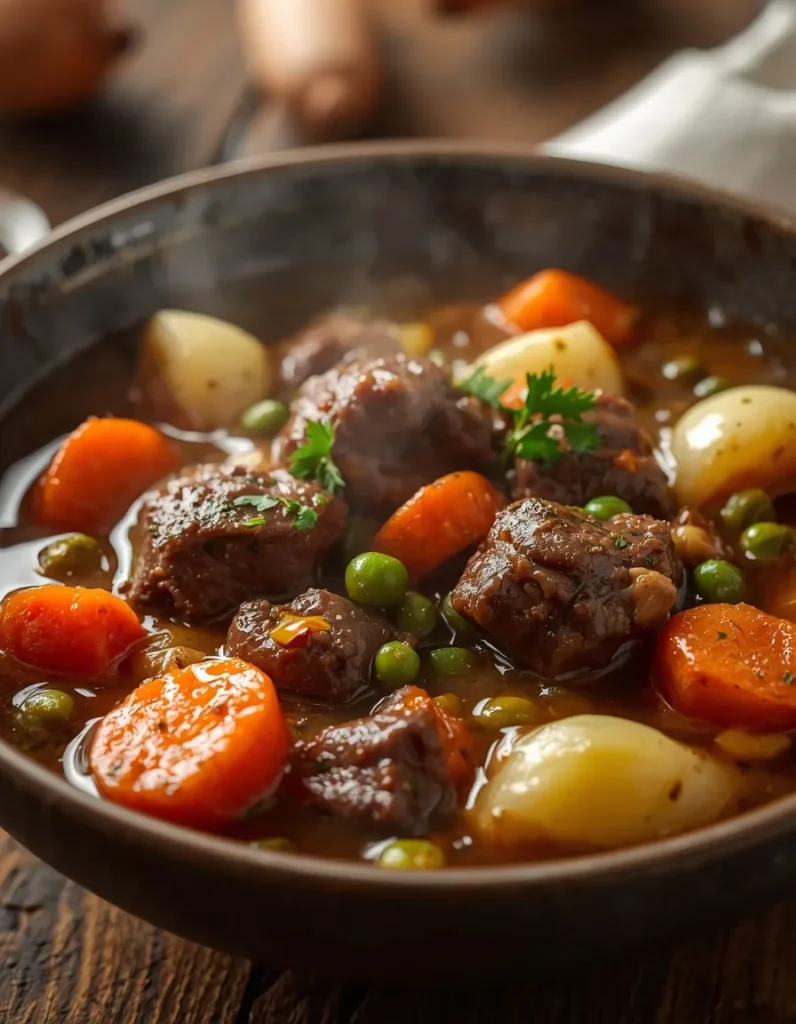
Table of Contents
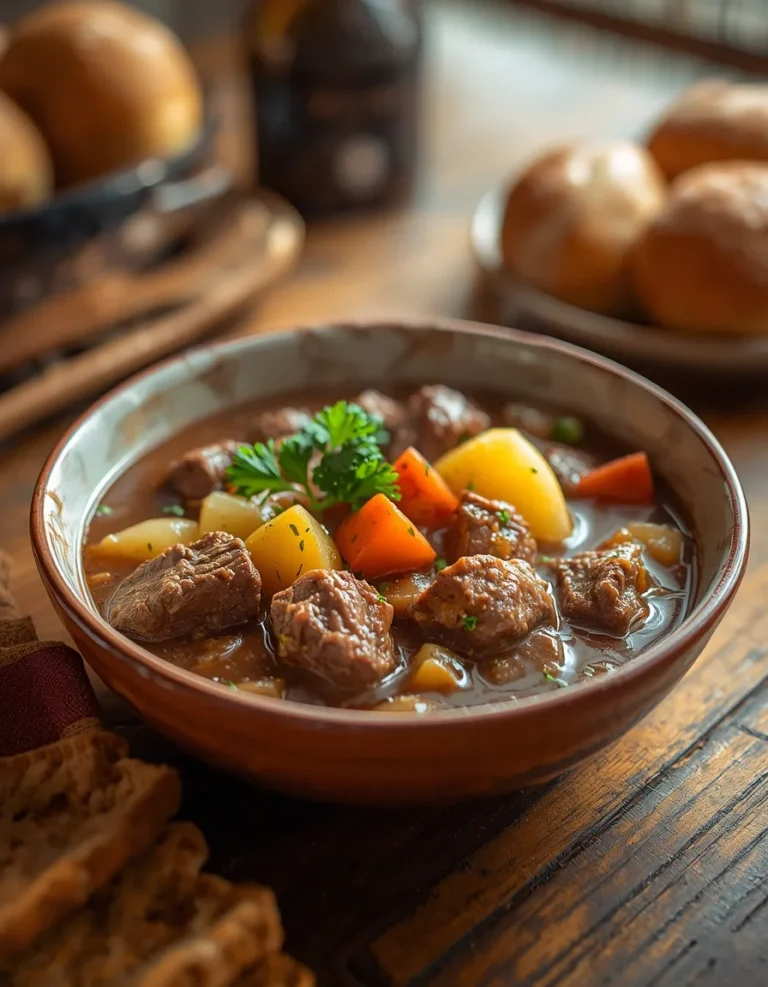
Classic Comfort, Instant Pot Beef Stew:
There’s a special kind of frustration that comes with craving beef stew on a Tuesday night. You know the kind I mean — that deep, slow-simmered richness where the meat practically dissolves on your fork and the broth tastes like it’s been coaxed along for hours by someone who loves you. The problem is, traditional beef stew does take hours. Stovetop versions demand a lazy afternoon of babysitting a pot, and Crockpot methods ask you to plan eight hours ahead, which is a big ask on a random weeknight.
That’s where the Instant Pot changes the game entirely. Pressure cooking traps steam and moisture inside a sealed environment, which means connective tissue in tougher cuts breaks down fast without drying out the meat. The result is that same all-day, cozy flavor you’d get from Sunday simmering — except you can have a steaming bowl on the table in under 90 minutes. Same soul, fraction of the time.
A full-bodied red — Pinot Noir, Cabernet Sauvignon, Merlot, Malbec, or Bordeaux — complements the richness beautifully, and a warm slice of no-knead focaccia, rosemary olive oil bread, or beer bread rounds out the meal. If you’re looking for another impressive beef dinner for a special occasion, try our Beef Wellington Recipe for a beautifully wrapped, restaurant-style centerpiece.
The Golden Rules Before You Start
A few non-negotiables separate a good Instant Pot beef stew from a mediocre one, and they’re worth internalizing before you touch a single ingredient.
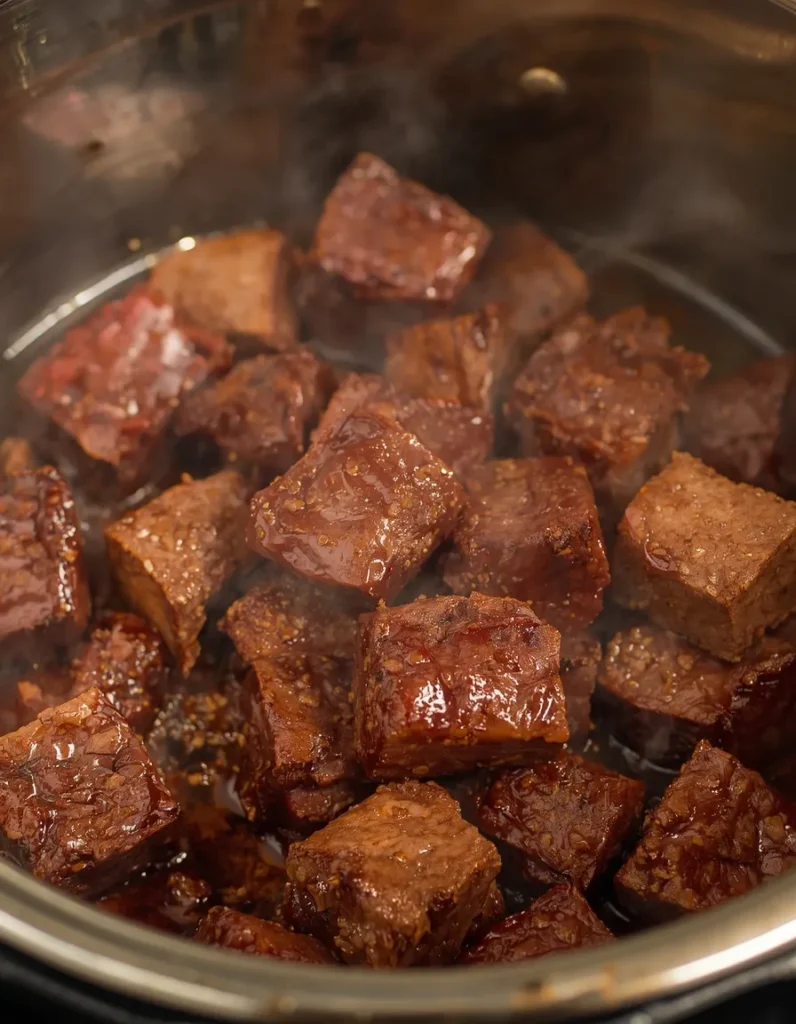
First, sear your beef properly. Brown the chuck roast in batches using the SAUTÉ function, and resist the urge to dump it all in at once. Crowding the pot steams the meat instead of browning it, and that browned crust is where most of your flavor actually comes from.
Second, deglaze like you mean it. After searing, pour in your broth or red wine and scrape every last browned bit off the bottom of the pot with a wooden spoon. Those stuck-on morsels (chefs call it “fond”) are concentrated flavor, but if you leave them behind, they’re also the most common cause of the dreaded Instant Pot “Burn” warning.
Third, cut your vegetables generously. Carrots sliced into half-inch diagonals and potatoes cut into three-quarter-inch chunks will hold their shape under pressure instead of turning to mush. Pressure cooking is aggressive — thin-cut vegetables simply won’t survive it intact.
Finally, layer, don’t stir. Once you add the tomato sauce, let it sit on top of everything else rather than mixing it in. Keeping liquids away from the heating element at the base of the pot is key to avoiding scorching.
What You’ll Need
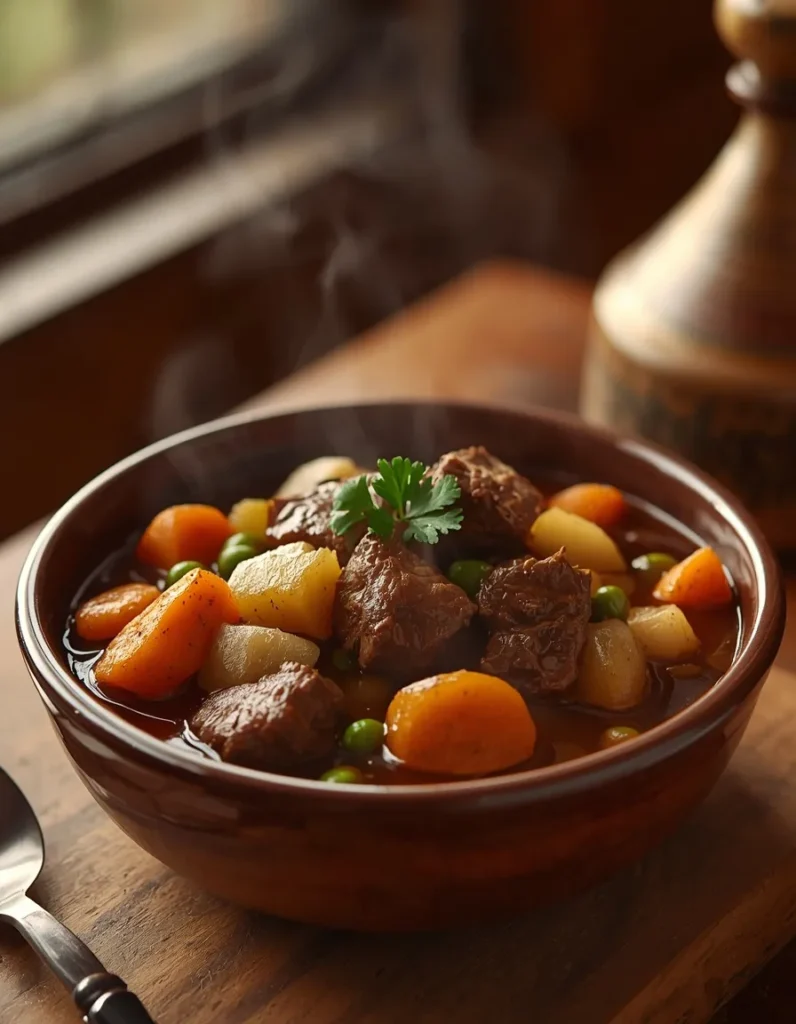
For the protein, you’re looking at 2 pounds of boneless chuck roast, trimmed of excess fat and cubed into 1.5-inch pieces. For aromatics and vegetables: one large diced yellow onion, two minced garlic cloves, a pound of carrots (roughly six medium ones, sliced half-inch thick), and one large russet potato, peeled and chopped into three-quarter-inch pieces.
Your broth and seasoning lineup includes a 14.5-ounce can of low-sodium beef broth, an 8-ounce can of no-salt-added tomato sauce, a tablespoon of Worcestershire sauce, a bay leaf, a teaspoon of dried thyme, two teaspoons of kosher salt, half a teaspoon of black pepper, and three tablespoons of extra-virgin olive oil for searing.
To finish, you’ll want a cornstarch slurry (two tablespoons cornstarch whisked with two tablespoons water), a cup and a half of peas, and fresh parsley or rosemary to garnish.
Cooking for specific diets? No problem. Going Whole30 or paleo means swapping cornstarch for arrowroot powder and Worcestershire sauce for coconut aminos. Cutting carbs? Skip the potato and reach for radishes, sweet potatoes, or parsnips instead. Not a pea person? Sliced mushrooms or frozen corn work just as well.
How to Actually Make It
Start on SAUTÉ mode. Heat a tablespoon of oil, season half your beef cubes with salt and pepper, and sear them undisturbed for four to five minutes per side until they’ve developed a proper crust. Pull them out, and repeat with the second batch.
Add the remaining oil to the pot and cook your diced onion for about six minutes until it softens. Toss in the garlic and stir for just thirty seconds — enough to release its aroma without letting it burn.
Now deglaze. Pour in the beef broth (or red wine, if you’re feeling fancy) and scrape the bottom of the pot thoroughly until it’s smooth and clean.
Layer in the carrots, potatoes, Worcestershire sauce, bay leaf, thyme, browned beef, and any accumulated juices from the plate. Pour the tomato sauce over the top and leave it be — no stirring. Lock the lid and set it to HIGH pressure for 35 minutes.
Once cooking finishes, let the pressure release naturally for 10 minutes before venting whatever steam remains. Fish out the bay leaf, whisk up your cornstarch slurry, and stir it into the hot stew until it thickens. Fold in the peas at the end just to warm them through.
If you prefer firmer vegetables, try the staggered method some readers swear by: pressure cook the beef and broth alone for 25 minutes, quick release, then add the carrots and potatoes and cook for another 10 minutes under pressure.
Pairings, Storage, and Troubleshooting
A full-bodied red — Pinot Noir, Cabernet Sauvignon, Merlot, Malbec, or Bordeaux — complements the richness beautifully, and a warm slice of no-knead focaccia, rosemary olive oil bread, or beer bread rounds out the meal.
Leftovers keep well in an airtight container in the fridge for up to four days, and reheat gently over medium-low heat or in the microwave. For longer storage, freeze in freezer-safe containers for up to three months and thaw overnight in the fridge before reheating. To get ahead, chop your onions, carrots, and potatoes up to a day in advance.
A couple of common hiccups: if your beef turns out tough, it’s usually because a leaner cut was used instead of chuck roast, or the pressure was released too quickly, causing the meat fibers to seize up. And yes, you can overcook stew meat in a pressure cooker — stick to the 35-minute mark for 1.5-inch cubes. If you’re battling the “Burn” warning, go back to basics: deglaze thoroughly, and don’t stir once that tomato sauce goes in.

That’s where the Instant Pot changes the game entirely. Pressure cooking traps steam and moisture inside a sealed environment, which means connective tissue in tougher cuts breaks down fast without drying out the meat. The result is that same all-day, cozy flavor you’d get from Sunday simmering — except you can have a steaming bowl on the table in under 90 minutes. For another helpful take on Instant Pot beef stew, you can also explore this Instant Pot Beef Stew recipe from Well Plated. Same soul, fraction of the time.

One Comment