
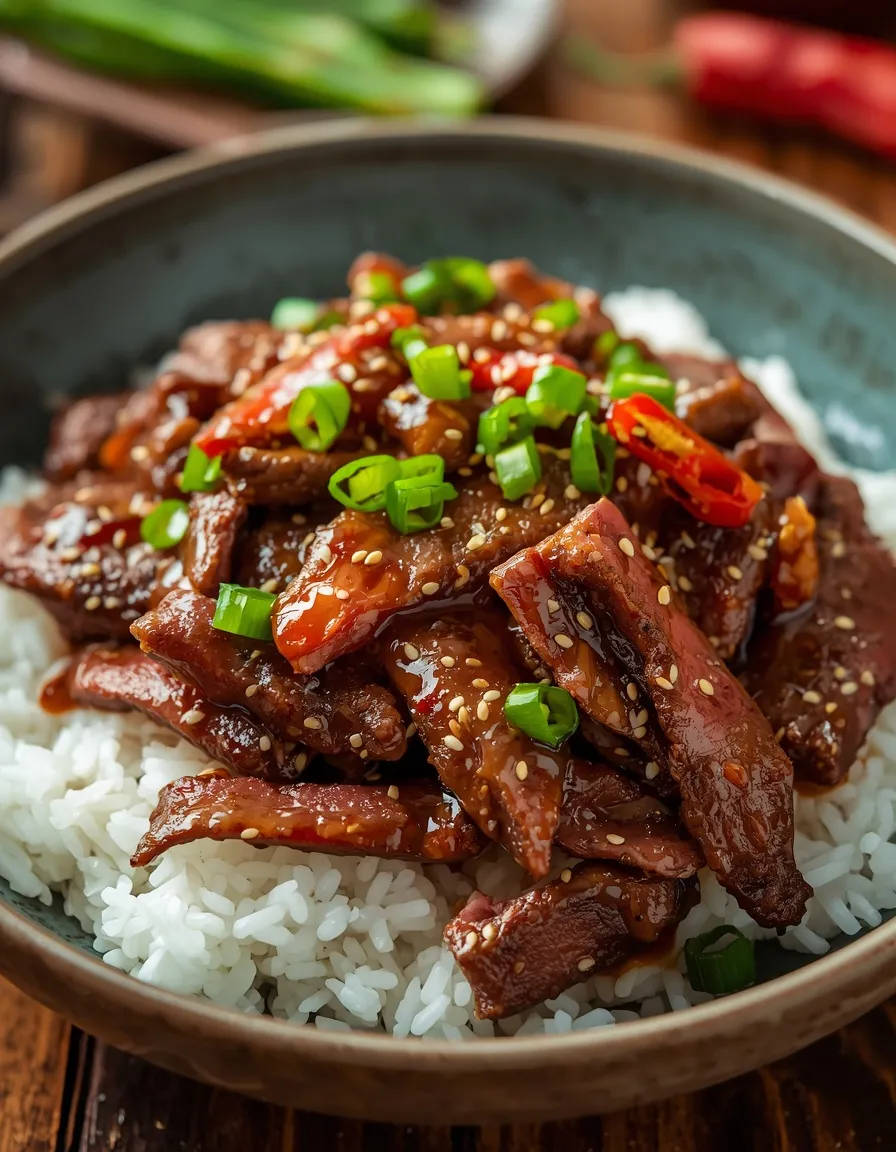
Mongolian Beef Recipe: Crispy, Tender & Easy 45-Minute Dinner
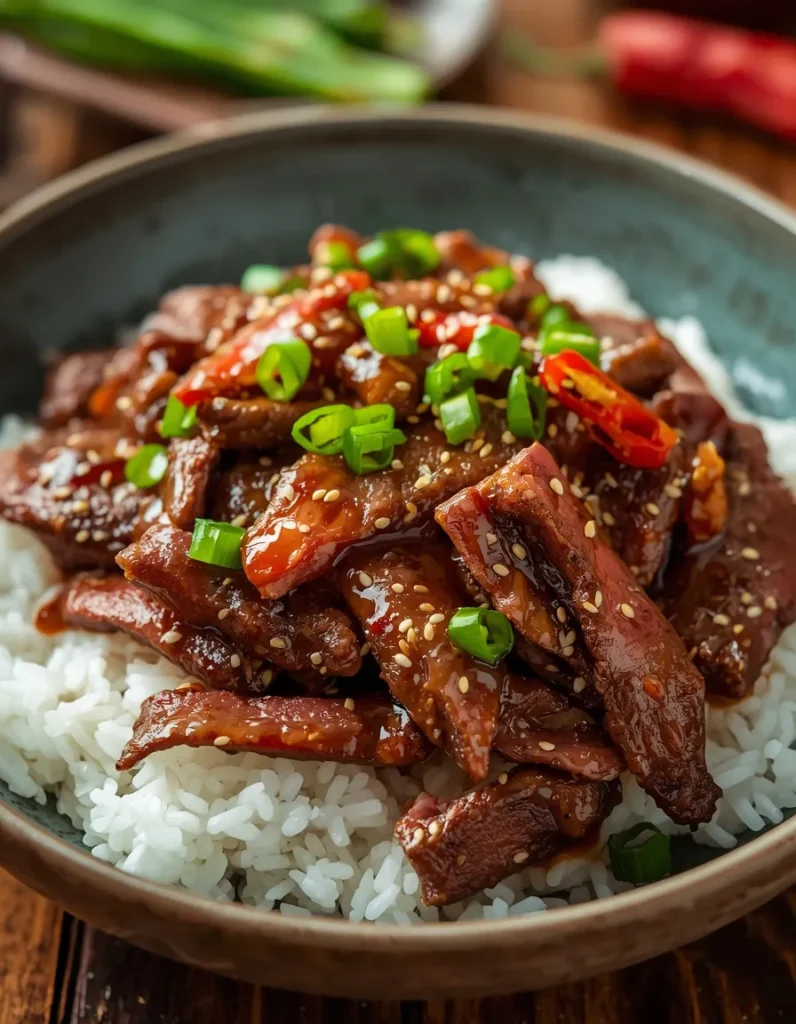
Table of Contents
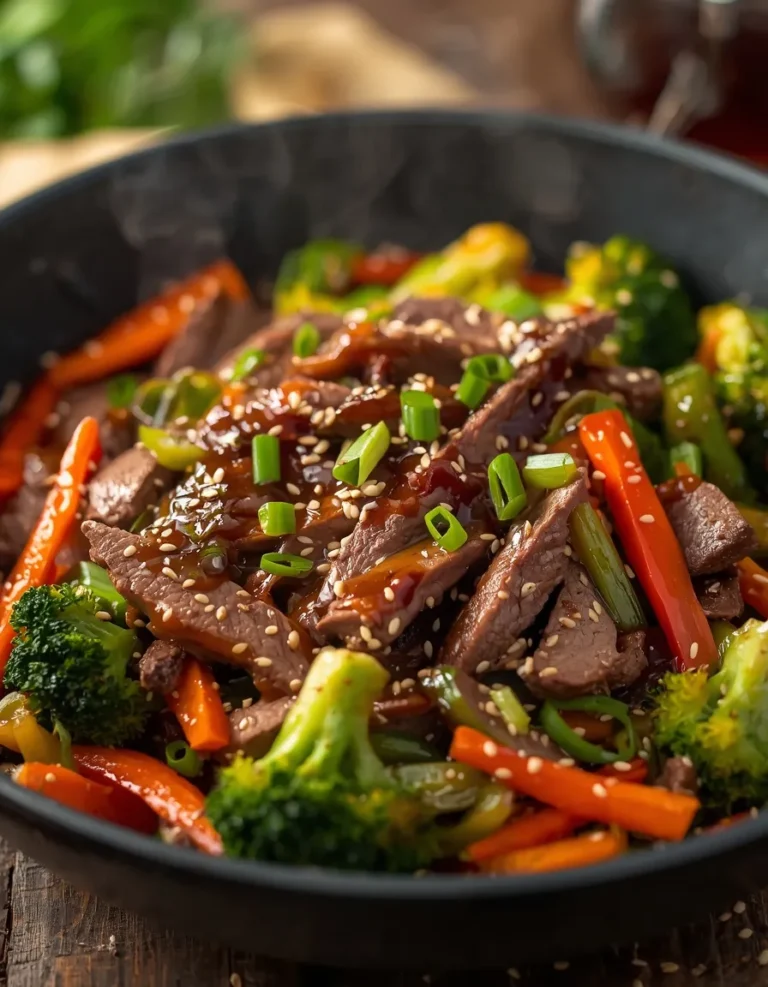
Crispy Mongolian Beef Recipe:
Let’s get something out of the way immediately: Mongolian beef recipe has about as much to do with Mongolia as General Tso’s chicken has to do with an actual Qing dynasty general. Traditional Mongolian cooking leans heavily on boiled meats — lamb, mostly — served alongside simple dipping sauces. Stir-frying thin strips of beef in a glossy, sweet-savory glaze? That’s not a technique you’ll find on the steppe.
What you will find, if you’re ever lucky enough to sit at a Mongolian table, is a level of hospitality that borders on aggressive. I remember hearing about a family friend who traveled through Inner Mongolia and got handed shot after shot of 90-proof sorghum liquor — bai jiu — by a host who considered an empty glass a personal insult. That’s the real Mongolia. Not this dish.
So where did “Mongolian beef” actually come from? The honest answer is: Chinese-American restaurant marketing, sometime in the mid-20th century. Menu writers needed names that sounded exotic but approachable to American diners, and “Mongolian” apparently had the right ring to it — evocative, a little mysterious, not too intimidating. It’s the same phenomenon that gave us “Singapore Noodles,” a dish that, as far as anyone can tell, Singapore has never claimed.
My own pet theory — and I’ll admit this is pure speculation dressed up as folklore — is that Mongolian beef started life as a clumsy cousin of Orange Beef. Someone, somewhere, forgot the orange peel, panicked, and dumped in extra sugar to compensate. A happy accident became a menu staple. I can’t prove it. But cooking history is full of stories like this, and I like this one.
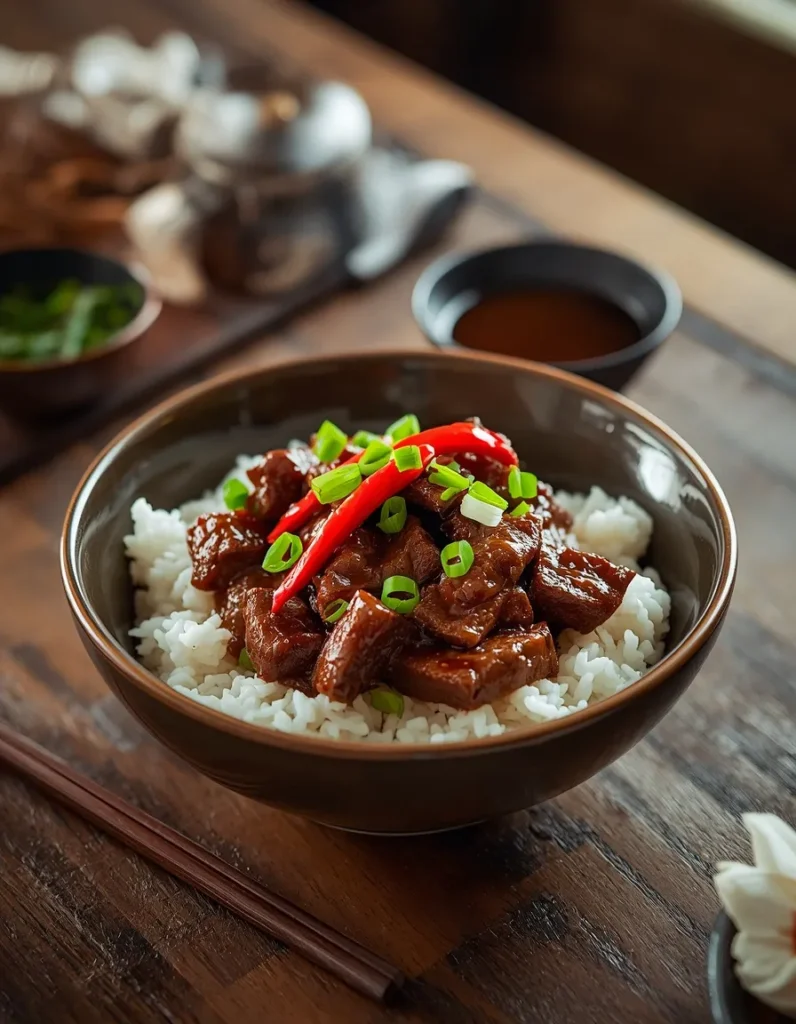
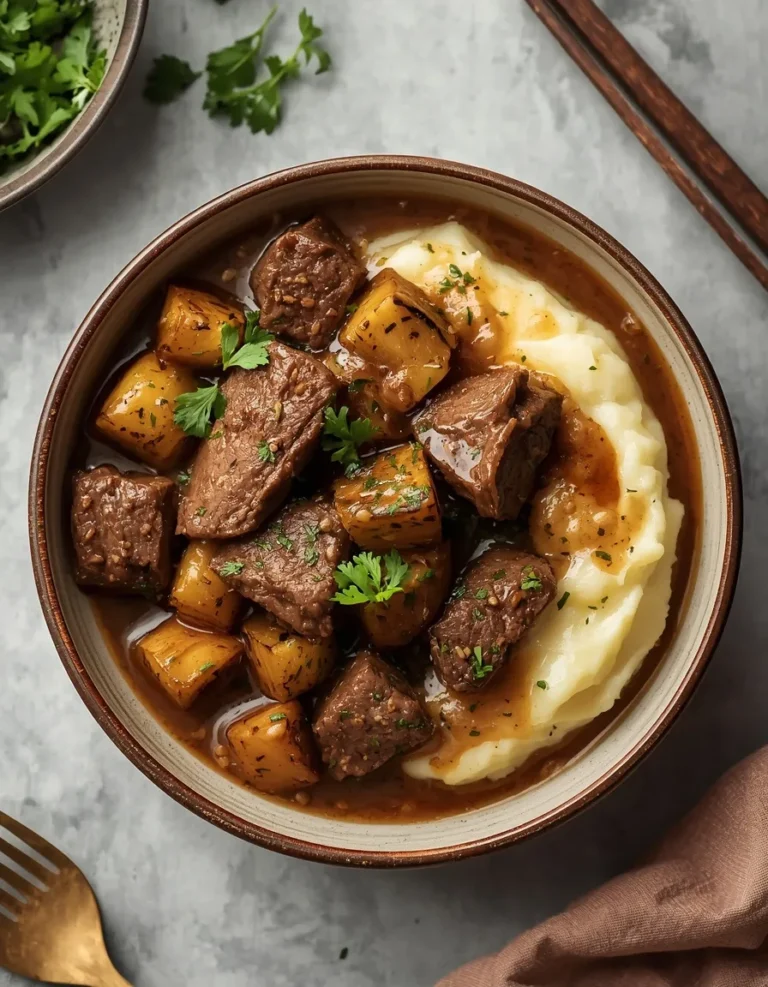
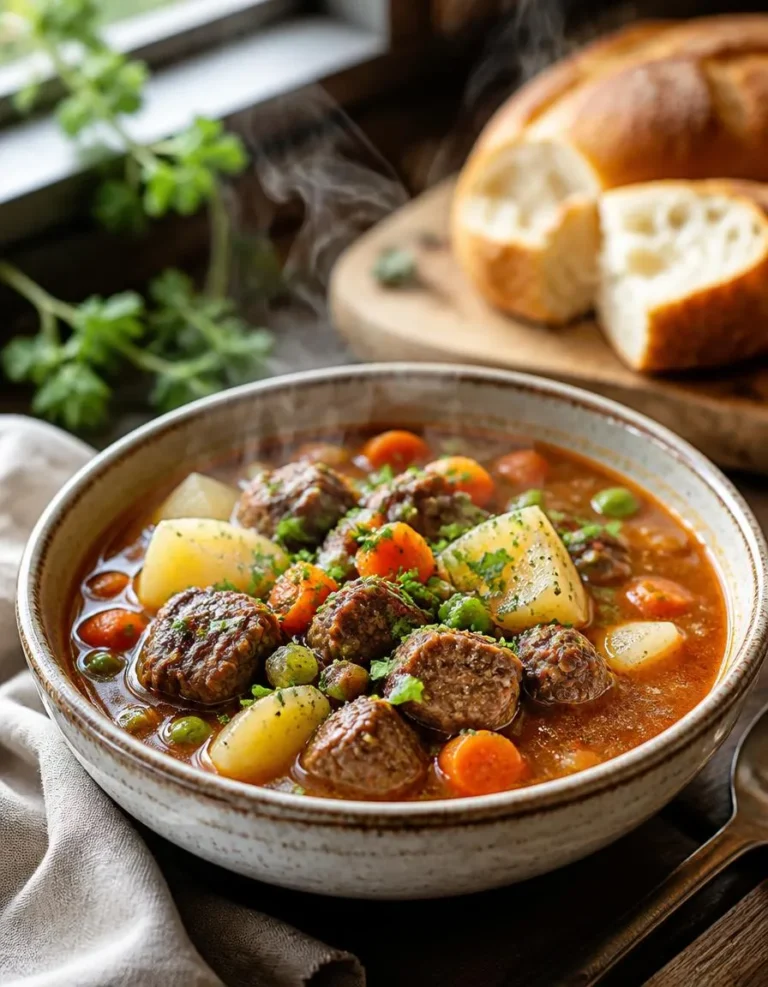
If you liked this crispy Mongolian Beef Recipe, you might also enjoy our Instant Pot Beef Stew for another hearty beef dinner. It uses tender beef, vegetables, and a rich savory gravy for a completely different but equally comforting meal.
Why Most Restaurant Versions Let You Down
Here’s my actual gripe with the dish as it’s commonly served. Walk into most Chinese-American restaurants — P.F. Chang’s included — and you’ll get a plate of beef drowning in oil, coated in a sauce so sweet it edges into dessert territory. It’s not that it tastes bad, exactly. It’s that it tastes like one note, played very loudly.
My fix has been the same for years: cut the sugar hard, and cut the oil harder. You still get that glossy, clingy sauce and that satisfying crisp on the beef — you just don’t need a nap afterward.
I tested this version relentlessly on my family, because that’s what you do when you’ve been cooking for over fifty years and you still can’t resist feedback. Judy took one bite and just said, “WOW. That is SO good.” Sarah, never one to mince words, went with “Holy crap, that’s tasty.” Kaitlin didn’t say much — she just went back for seconds, which honestly tells you more than any five-star review could.
A note on this update: since this recipe first went up in 2015, I’ve bumped the beef from 8 ounces to a full pound (because who’s satisfying four people with 8 ounces of anything), added metric measurements for readers outside the US, reshot every photo, and added full nutritional info. Same recipe at its core — just sharper around the edges.
How to Make It
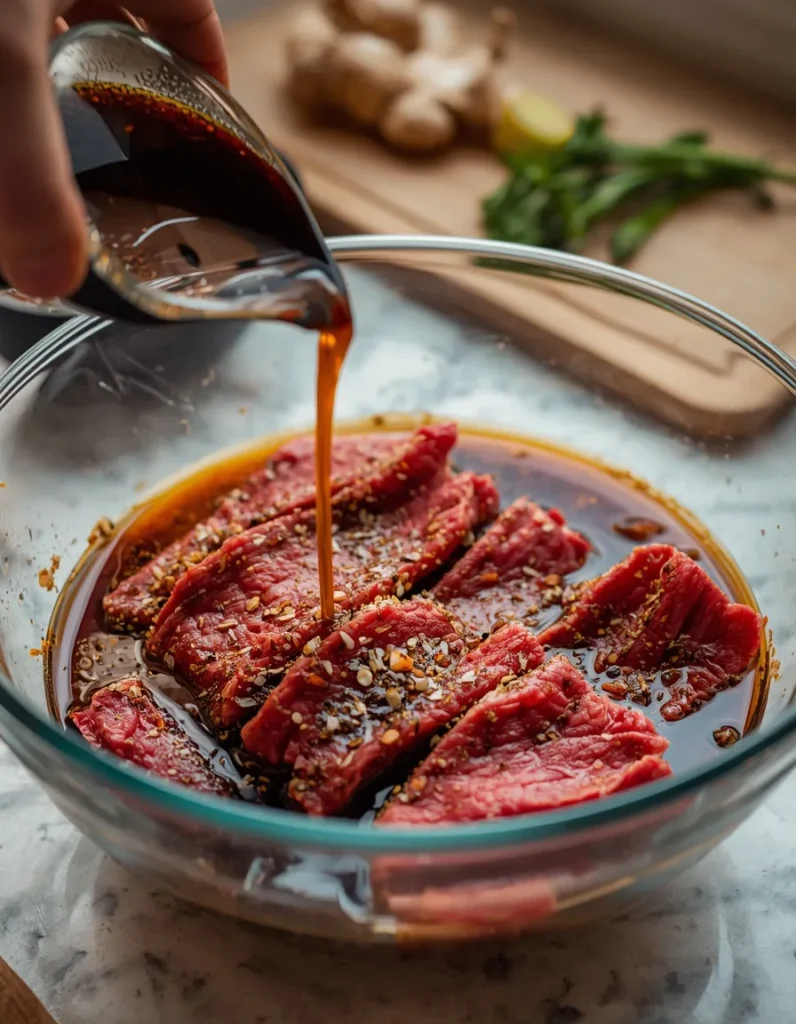
Step 1: Velvet and marinate the beef. Slice 1 pound of flank steak against the grain into pieces about ¼ inch thick — this matters more than people think, since cutting with the grain gives you chewy, stringy beef no matter how well you cook it. Toss the slices with neutral oil, Shaoxing wine, light soy sauce, cornstarch, a splash of water, and a pinch of baking soda. Let it sit for an hour. The baking soda is doing quiet, important work here — it’s what gives you that tender, almost velvety bite.
Step 2: Build the sauce and dredge. Dissolve brown sugar into hot water or stock, then stir in light and dark soy sauce. Set it aside. Once the beef has marinated, dredge each slice thoroughly in cornstarch — don’t rush this part, it’s what gives you the crust.
Step 3: Sear hard and fast. Heat about ⅔ cup of neutral oil in a wok until it’s nearly smoking. Lay the beef in flat, working in batches if needed, and sear for a minute per side until crisp and browned. Drain off all but a tablespoon of oil, and don’t skip this step — it’s the difference between “crispy beef” and “beef sitting in a puddle.”
Step 4: Aromatics, then sauce. Stir-fry minced ginger and dried red chili peppers for about 15 seconds — just until fragrant, not burnt. Add garlic and the white parts of your scallions for another 15. Pour in the sauce, let it simmer for two minutes, then stir in a cornstarch slurry until it thickens enough to coat the back of a spoon.
Step 5: Bring it together. Toss the crispy beef and the green scallion tops back into the wok for about 30 seconds, just to coat everything evenly. Serve immediately, ideally over steamed white rice, while the beef still has its crunch.
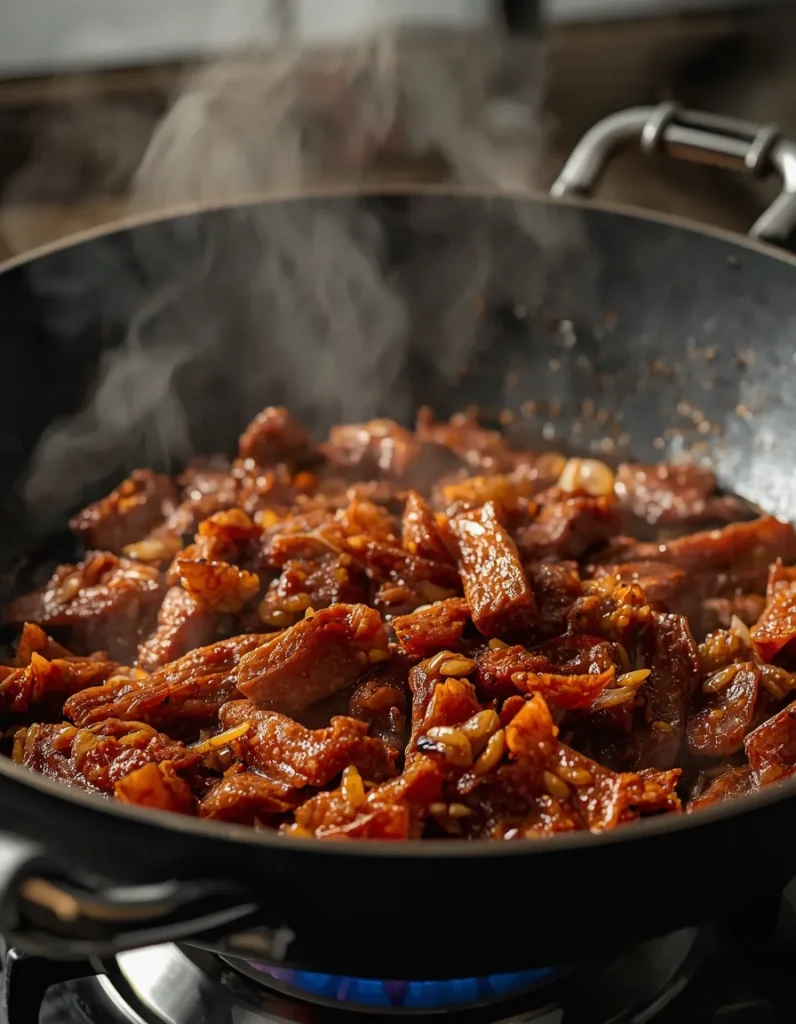

So where did “Mongolian beef” actually come from? The dish is generally associated with Chinese-American restaurant cuisine rather than traditional Mongolian cooking. For another perspective on the dish’s ingredients, preparation, and background, you can also explore this Mongolian Beef Recipe from The Woks of Life.
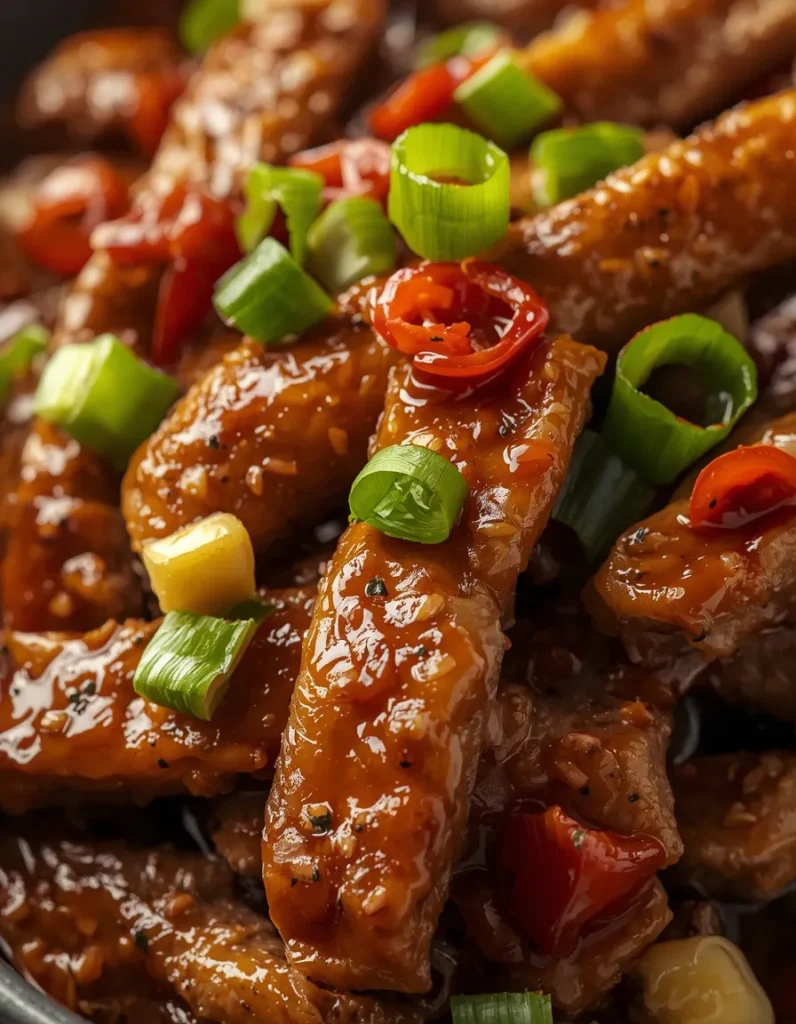
Recipe Card
Serves 4 | Prep: 35 min | Cook: 10 min | Total: 45 min
Marinade: flank steak, neutral oil, Shaoxing wine, light soy sauce, cornstarch, water, baking soda
Sauce: light brown sugar, hot water or stock, light soy sauce, dark soy sauce
Searing: cornstarch, neutral oil
Aromatics & Finish: ginger, dried red chili peppers, garlic, scallions, cornstarch slurry
Nutrition (per serving): 383 kcal · 31g carbs · 26g protein · 16g fat · 960mg sodium
If you liked this one, you might also try our Beef with Chinese Broccoli, Chinese Braised Oxtail, or Chinese Braised Beef Shank — same philosophy, different cuts.


One Comment