Best Grilled Hamburger Recipe: How to Make the Perfect Juicy Burger (1)
Table of Contents
The Search for Best Grilled Hamburger Recipe
There’s a specific kind of frustration that comes with a bad backyard burger. You fire up the grill, you’ve got the buns, the toppings, maybe even a cold drink waiting — and then the patty comes off dry, crumbly, or shrunk down to the size of a slider inside a bun built for something twice as big. It’s not that burgers are hard. It’s that most of us are winging it, and a few small missteps compound into a mediocre result.
The goal isn’t complicated: a burger easy enough to throw together on a Tuesday, juicy and flavorful enough to satisfy the ketchup-and-three-cheeses crowd, but balanced enough that someone who just wants salt, pepper, and a good sear walks away happy too. That’s a narrower target than it sounds.
For guidance, it’s worth turning to Steven Raichlen — author, grilling authority, and founder of BBQ University — whose decades of testing meat ratios and grilling mechanics have turned burger-making from guesswork into something closer to a repeatable formula. Here’s what that formula looks like.
If you’re looking for a quicker version with exact measurements and step-by-step instructions, check out our Grilled Hamburger Recipe for an easy weeknight grilling favorite.
The Foundation: Meat Selection and Handling for Best Grilled Hamburger Recipe
Everything starts with the meat, and the ratio matters more than most people realize. 80% lean to 20% fat — usually ground chuck — is the standard for good reason. Fat is what keeps a burger juicy as it cooks; drop below that 20% mark and you’re flirting with a hockey puck by the time it hits medium.
Raichlen takes it a step further, favoring a custom blend of ground chuck and ground sirloin. The chuck brings the fat and richness; the sirloin adds a deeper, beefier flavor. It’s a small adjustment, but it’s the kind of detail that separates a good burger from a memorable one.
Temperature discipline matters just as much as the blend. Keep your ground beef refrigerated right up until you’re ready to season and shape it. Once fat starts to soften or melt, you lose the structure that keeps a patty from falling apart on the grate — and you can’t get that texture back.
When you do mix, resist the urge to really work the meat. Combine your seasonings just until incorporated. Overmixing breaks down the texture and pushes out moisture, leaving you with a dense, dry burger instead of one that stays tender. A simple way to check you’ve hit the right point is what’s sometimes called the “palm stick test” — press a small amount of the mixture into your palm, and if it holds together without excessive kneading, you’re there.
Engineering the Perfect Patty
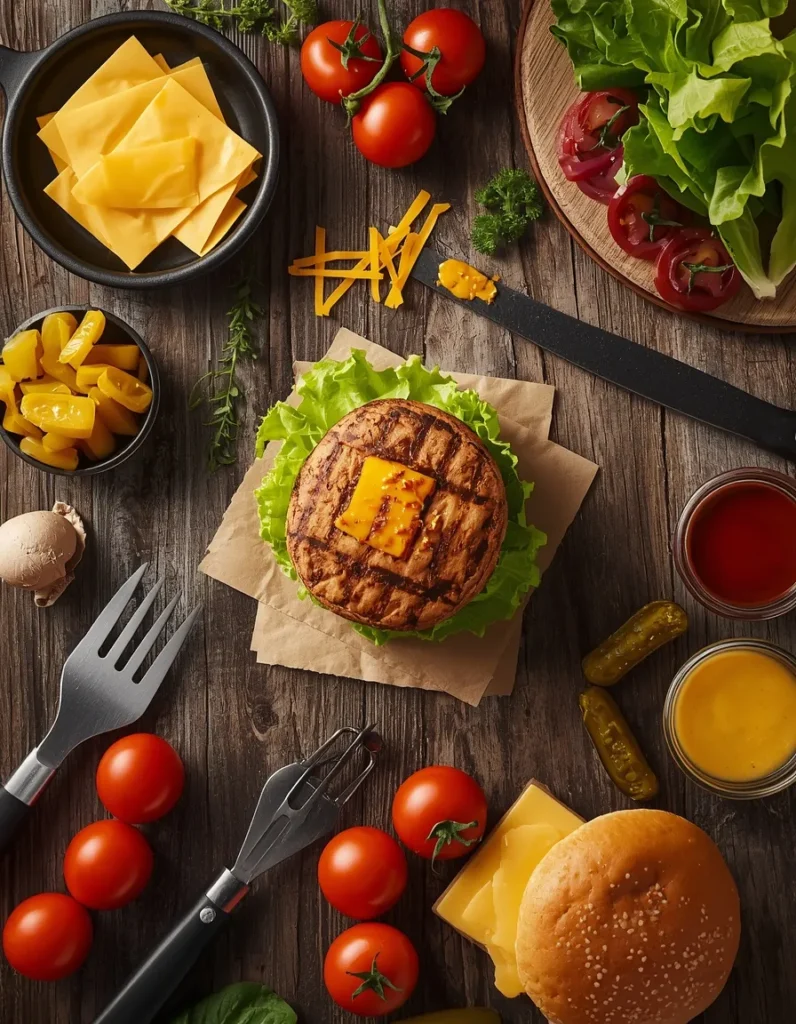
Shaping is where a lot of home cooks lose ground without realizing it. Patties shrink as they cook, so form them about an inch thick and roughly an inch wider in diameter than your bun. Skip this step and you’ll end up with a patty that’s mysteriously smaller than the bread around it by the time it’s done.
Next comes the dimple — and this isn’t just a chef’s quirk. Instead of a small thumbprint in the center, press a wide, shallow depression across most of the patty’s surface. As the burger cooks, the center tends to puff upward; that dimple compensates for it, so you end up with a flat, evenly-cooked patty instead of a dome that rolls off your bun.
Shape your patties on a tray rather than in your hands. It sounds like a minor thing, but it keeps you from over-handling the meat or warming it with your palms — both of which work against the texture you just worked to preserve.
The Grilling Masterclass
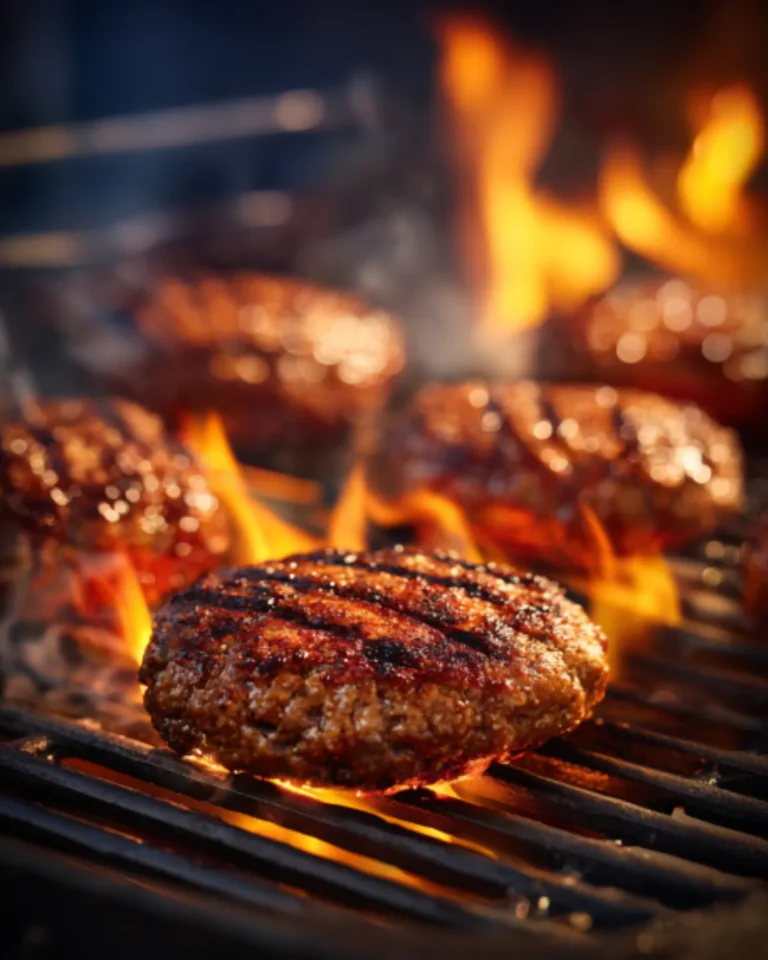
Start clean. A dirty grate is one of the most common causes of stuck, torn burgers. Oil the grates using tongs and a paper towel dipped in a neutral oil before anything goes on.
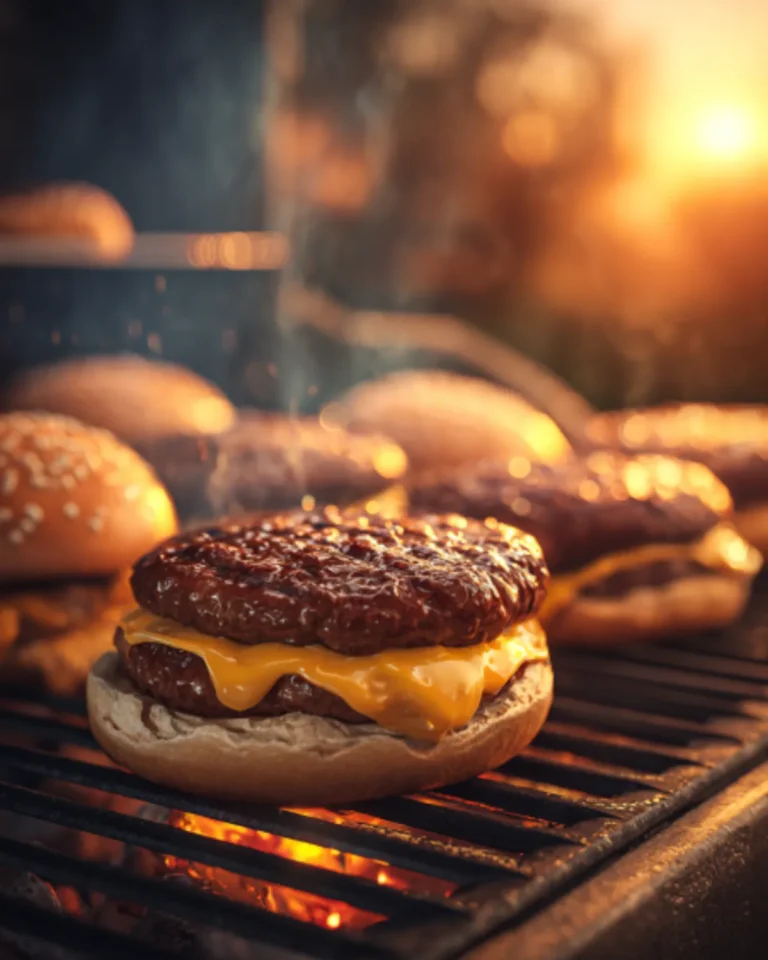
Charcoal and gas each have their case. Charcoal delivers hotter, drier heat and a better sear and flavor — a chimney starter makes getting it going fast and consistent. Gas wins on convenience, but you need to be deliberate about heat: let the grill reach 450°F to 500°F before your patties ever touch the grate.
Once you’re cooking, there are two rules worth internalizing. First, never press your burgers with a spatula. It feels productive, but all you’re doing is squeezing out the juices you spent this whole process trying to protect. Second, don’t be afraid to flip more than once. The old advice was to flip a burger exactly one time — but more recent research suggests flipping frequently actually produces more even cooking throughout the patty.
For doneness, rare runs about 4 minutes and 125°F, working up to well-done at 8–9 minutes and 160°F. For an accurate read, insert your thermometer probe through the side of the burger rather than the top — you’ll get a truer reading of the center.
For more expert grilling advice and additional burger-making techniques, check out the detailed tutorial from Simply Recipes
Finishing and Resting
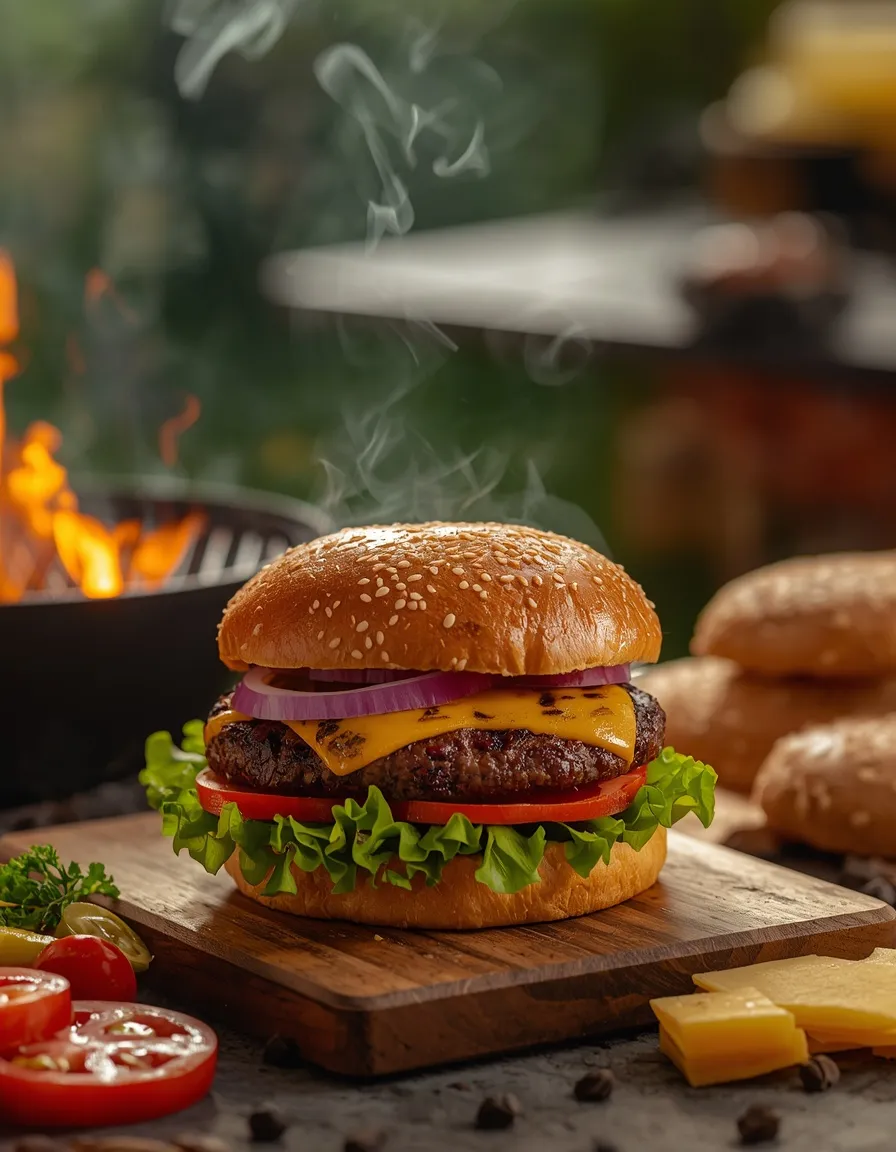
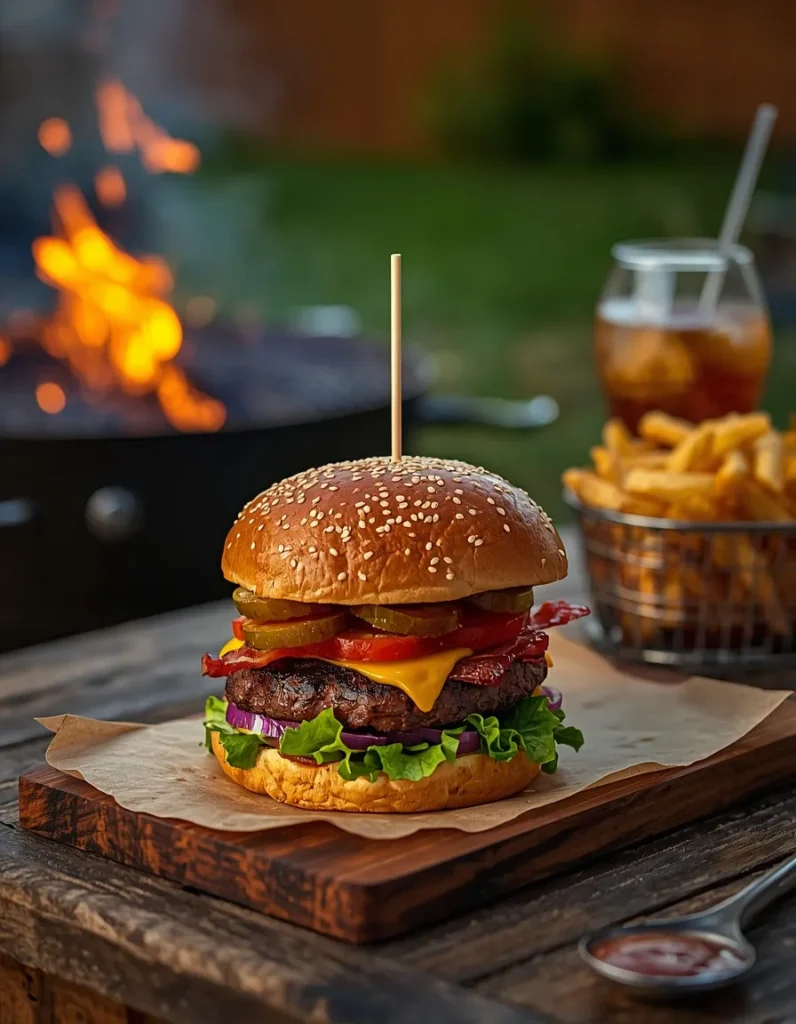
If you’re adding cheese, do it about a minute before the burger’s finished so it melts fully without overcooking the patty underneath. Toast your buttered buns over indirect heat during that same window — you want color and crunch, not char.
Once the burgers come off, let them rest for a minute before building your sandwich. That short pause lets juices redistribute through the patty instead of spilling out the second you bite in.
If you’re looking to elevate things further, this is the place to experiment — a little lemon zest, fresh herbs, or finely chopped sautéed mushrooms mixed into the patty can add unexpected depth without overwhelming the classic burger profile.
Recipe: The Classic Backyard Burger for Best Grilled Hamburger Recipe
Key ingredients: 80/20 ground beef, minced garlic, minced onion, and a splash of Worcestershire sauce.
Method: Combine the beef with garlic, onion, and Worcestershire, mixing just until incorporated. Shape into patties using the sizing and dimple techniques above, then chill briefly before grilling. Cook to your preferred doneness, add cheese in the final minute, and toast your buns alongside. Rest for a minute, then build — tomato jam, garlic aioli, and sautéed mushrooms are all worth trying as toppings that go beyond the usual lettuce-tomato-onion lineup.
Get the fundamentals right — the ratio, the handling, the shape, the heat — and everything else is just personal taste.