
10+ International Recipes: Easy Global Cuisine From Around the World
Table of Contents
Eat the World: How One Kitchen Became a Passport for International Recipes
I didn’t grow up eating chicken fingers on Tuesdays.
My childhood dinner table looked more like a departure board at an airport. One night it was Scotch broth thick enough to stand a spoon in. The next it was spaetzle swimming in butter.
Somewhere in between, there was always a pot of something my mother had picked up from a neighbor, a market stall, or a recipe card passed hand to hand at a dinner party years before I was born.
I didn’t know it at the time, but that chaotic, delicious rotation was quietly writing the mission statement for everything I do now.
So the recipes here lean toward approachable — real ingredients, clear instructions, and techniques that don’t assume you’ve been cooking professionally for a decade.
For simple ways to prepare flavorful chicken at home, try our Best Chicken Brine Recipe for juicy, well-seasoned meat before cooking.
That doesn’t mean bland or boring.
It means healthy, family-friendly cooking that still tastes like it came from somewhere specific.
A Kitchen Built on Curiosity, Not Convenience
People sometimes ask how “Eat the World” started, expecting a tidy answer — a trip, a cookbook, or a lightning-bolt moment.
The truth is less cinematic. It started the way most obsessions do: slowly, then all at once.
Growing up between Scotland’s coastlines and the hiking trails of Austria and southern Germany, I learned early that food is never just food.
Haggis and oatcakes taught me about thrift and tradition. A summer of family trips through the Alps taught me that a bowl of herb dumplings after a long hike tastes like nothing else on earth.
Later, living in Spain reshaped how I thought about a single country’s cuisine.
The seafood-heavy stews of the coast had almost nothing in common with the hearty, meat-forward cooking further inland. Yet both were unmistakably and proudly Spanish.
That pattern repeated everywhere I went.
Vacations in Greece and Cyprus meant slow-baked moussaka one night and a quick chicken gyro dripping with tzatziki the next.
Cooking classes in Laos handed me a completely different vocabulary — fresh herbs, sharp lime, and the particular snap of a green mango salad.
Volunteering in Mexico showed me the enormous, often frustrating gap between what most people think of as “Mexican food” and the pork carnitas and bright salsa verde actually simmering in someone’s home kitchen.
Time in Taiwan did the same thing for Chinese cuisine.
It pulled apart the Westernized dishes I’d grown up with from the oyster omelettes and pumpkin rice noodles that locals actually eat.
By the time I settled into my current home in the United States, I had a suitcase full of recipes, a head full of memories, and a nagging sense that all of it needed somewhere to live.
What “Eat the World” Actually Means
The name isn’t just a catchy tagline.
It’s a promise about how I approach every single recipe that ends up on this site.
Some dishes here are as authentic as I can make them — recipes tested against what I learned from locals, cookbooks, and years of eating the real thing in the place it came from.
Others are adapted, tweaked for the ingredients available in a normal American grocery store, or simplified for a Tuesday-night dinner rather than a holiday feast.
I think that distinction matters.
Food blogs have a bad habit of calling everything “authentic” whether it deserves the label or not. I’d rather be honest with you.
When a recipe has been adjusted, I tell you exactly how and why, right there in the post.
You deserve to know whether you’re cooking a family heirloom or a weeknight shortcut inspired by one.
That honesty is really the backbone of everything else.
This isn’t a project built around chasing trends or padding out a recipe index for the sake of it.
Every dish that makes it onto the site earns its place because it meant something to me first.
Maybe it was a meal that stopped a conversation at the table. Maybe it was a recipe a stranger insisted on writing down for me.
Sometimes, it’s simply a dish I burned three times before finally getting right.
Approachable First, Impressive Second
I’ll admit something: I’m not interested in recipes that require a trip to three specialty grocery stores and a free Saturday.
My own kitchen belongs to a busy household, not a restaurant.
I cook for people who want dinner on the table, not a science project.
So the recipes here lean toward approachable — real ingredients, clear instructions, and techniques that don’t assume you’ve been cooking professionally for a decade.
That doesn’t mean bland or boring.
It means healthy, family-friendly cooking that still tastes like it came from somewhere specific.
Of course, there’s also room for the occasional indulgent recipe because life is genuinely too short to skip the lemon madeleines or the Swedish cardamom buns.
Balance, not deprivation, is the goal.
For more inspiration, Caroline’s Cooking offers a wonderful collection of international recipes from around the world, with dishes inspired by different cultures and cuisines.
Why the World Fits on One Site
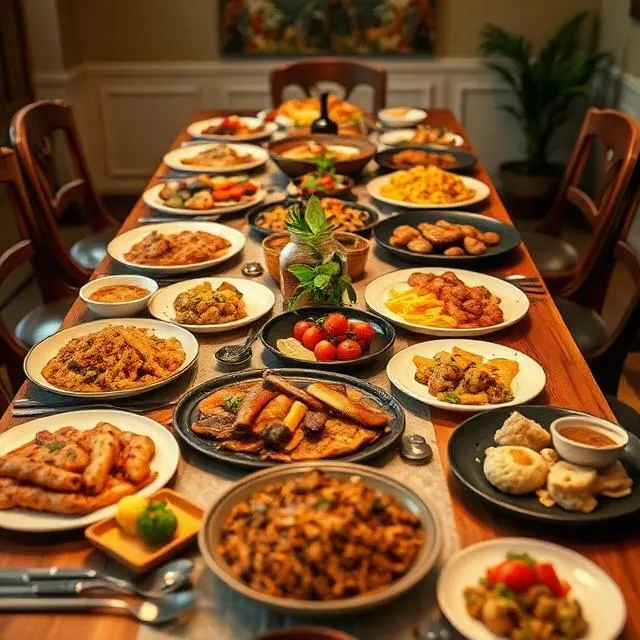
Some people wonder why a single blog tries to cover Catalan fish stew, Persian herb rice, Korean bibimbap, and Louisiana jambalaya all under one roof.
Wouldn’t it make more sense to specialize?
Maybe.
But that’s not how I actually cook, and it’s not how most home cooks I know actually eat, either.
We don’t live in one cuisine.
We borrow, we improvise, and we follow our cravings.
We might crave bulgogi on Monday and a comforting Polish gingerbread cake by the weekend.
This site is organized to reflect that.
The recipes are broken into regions so you can dig deep into a specific cuisine when you want to, or wander freely between continents the way dinner conversations actually tend to go.
Every recipe here carries a little piece of somewhere I’ve been, someone I’ve cooked with, or something I couldn’t stop thinking about until I recreated it at home.
My hope is that as you work your way through this site, your own kitchen starts to feel a little more like a passport, too — stamped, well-used, and always ready for the next destination.

One Comment