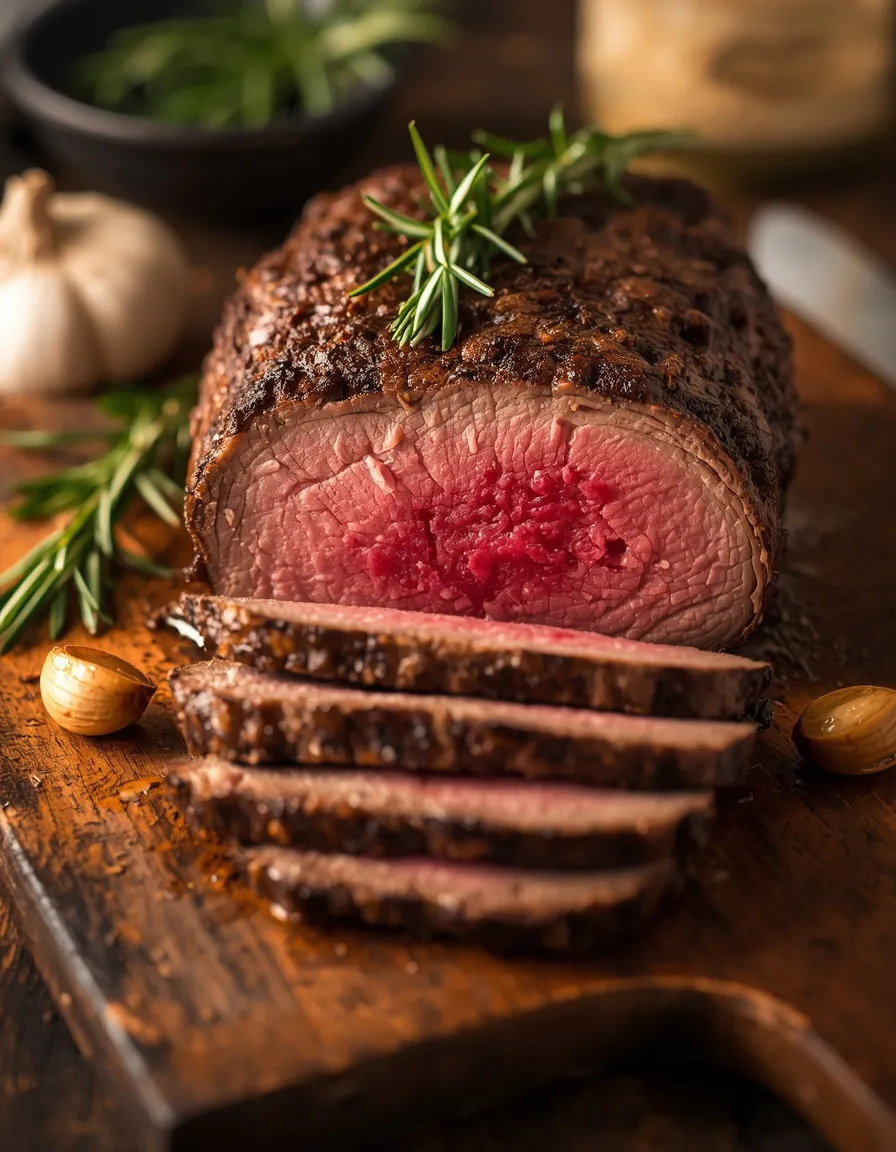
Slow Cooked Tri Tip Roast: 7 Secrets for a Tender, Juicy Roast
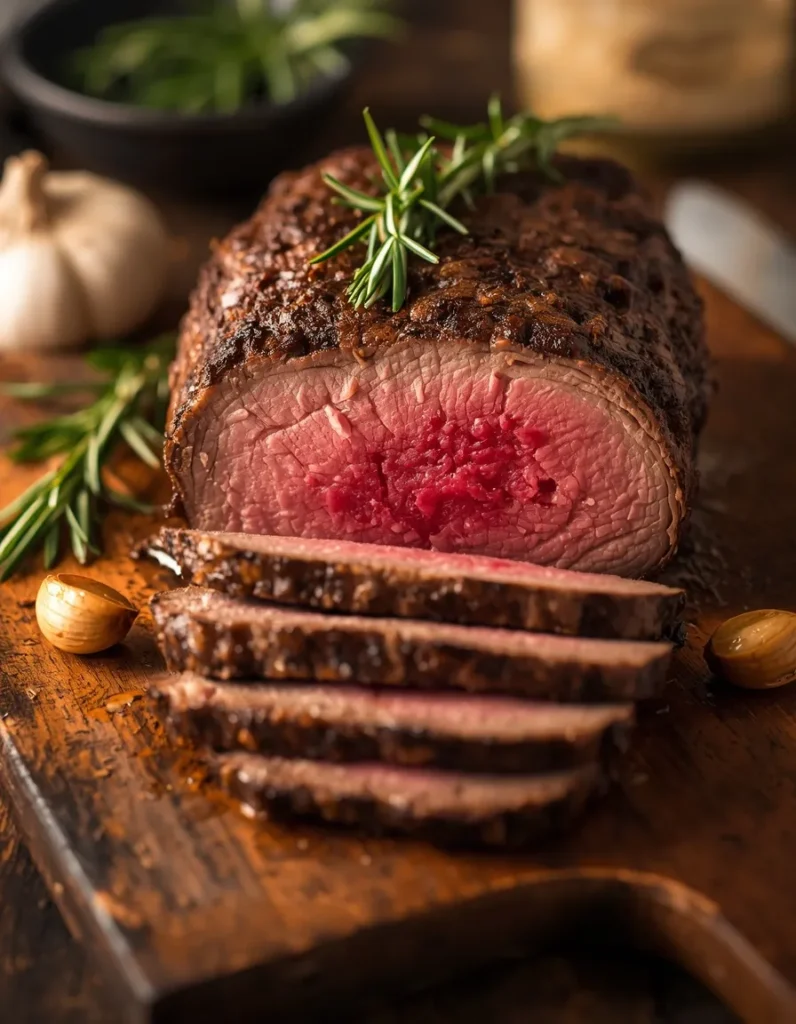
Table of Contents
Perfect Slow Cooked Tri Tip Roast
Tri-tip has a reputation problem. It’s lean, it’s a little unusual in shape, and if you cook it wrong, you end up with something closer to shoe leather than dinner. But here’s the thing: when you combine a hard, aggressive sear with a carefully timed slow-cooker finish, that same lean cut turns into something genuinely moist, deep in flavor, and tender enough to pull apart with a fork. No brisket-level fat content required.
This recipe has earned a steady 4.6-star rating from home cooks who keep coming back to it, and the reviews tell the story better than we can: “Made this for Sunday dinner and my picky teenager asked for seconds.” “Finally a tri-tip that doesn’t dry out.” “This is going into permanent rotation.” The method works — and below, we’re sharing not just the base recipe, but the small adjustments that take it from good to genuinely great.
If you’re looking to improve your grilling skills as well, check out our detailed guide on Burger Cooking Times, where you’ll learn how temperature and timing affect tenderness and juiciness for different cuts of meat.
Pro Tips for Success
A few tweaks separate an average tri-tip from one people ask you to make again.
Go heavy on the dry rub. Don’t just dust the surface with a pinch of seasoning. Rub adobo seasoning generously over the entire roast — every side, every edge — before it touches the pan. This isn’t decoration; it’s the foundation of the crust that locks moisture in during the sear.
Marinate ahead if you can. If your schedule allows it, treat the roast to a steakhouse-style marinade for 24 hours before cooking. The extra time lets the flavors penetrate past the surface, so every slice carries that depth, not just the outer inch.
Cook to temperature, not to the clock. A slow cooker’s timer is a guideline, not gospel — every machine runs a little differently. Use an instant-read thermometer and pull the roast at 140°F (60°C) for a perfect medium. This one habit does more to prevent dry, overcooked meat than anything else on this list.
For more inspiration and alternative preparation methods, check out this Slow-Cooked Beef Loin Tri-Tip Roast guide, which includes reader-tested variations and serving ideas.
Ingredients
The essentials:
- 2 tablespoons olive oil
- 1 tri-tip roast (about 2.25 pounds)
- 1 yellow onion, sliced
- 1 cup water
- 2 teaspoons beef bouillon (or 1 bouillon cube, crushed)
- 2 cloves garlic, minced
The flavor boosters:
- 2–3 tablespoons adobo seasoning (enough to coat the whole roast, not just a sprinkle)
- Optional: your favorite steakhouse-style marinade pack, for a 24-hour soak
Step-by-Step Directions
Step 1: The Flavor Foundation (Searing)
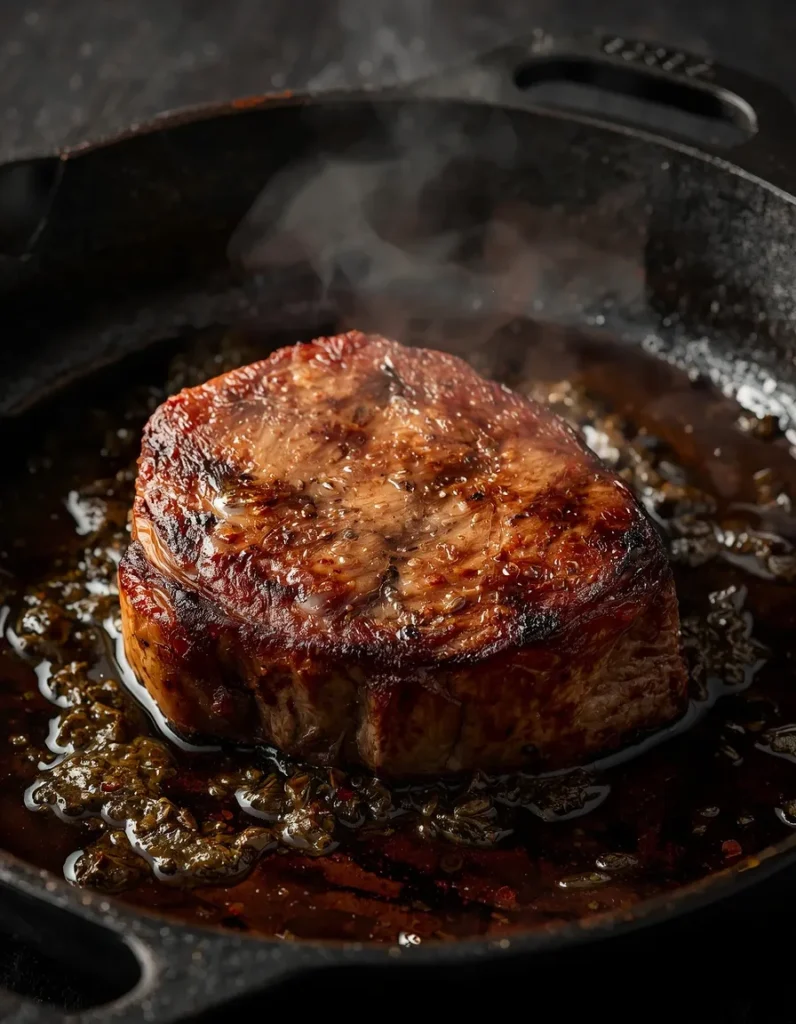
Lightly coat the inside of your Slow Cooked Tri Tip Roast with olive oil so nothing sticks later. Heat the remaining oil in a heavy skillet over high heat until it’s shimmering. Sear the tri-tip for a full 5 minutes per side, undisturbed, until a deep brown crust forms.
Don’t skip this step. It’s tempting to toss everything in the slow cooker and call it a day, but that hard sear is where most of the roast’s flavor actually comes from. Skipping it is the single most common reason a slow-cooked roast tastes flat.
Step 2: Sautéing and Deglazing
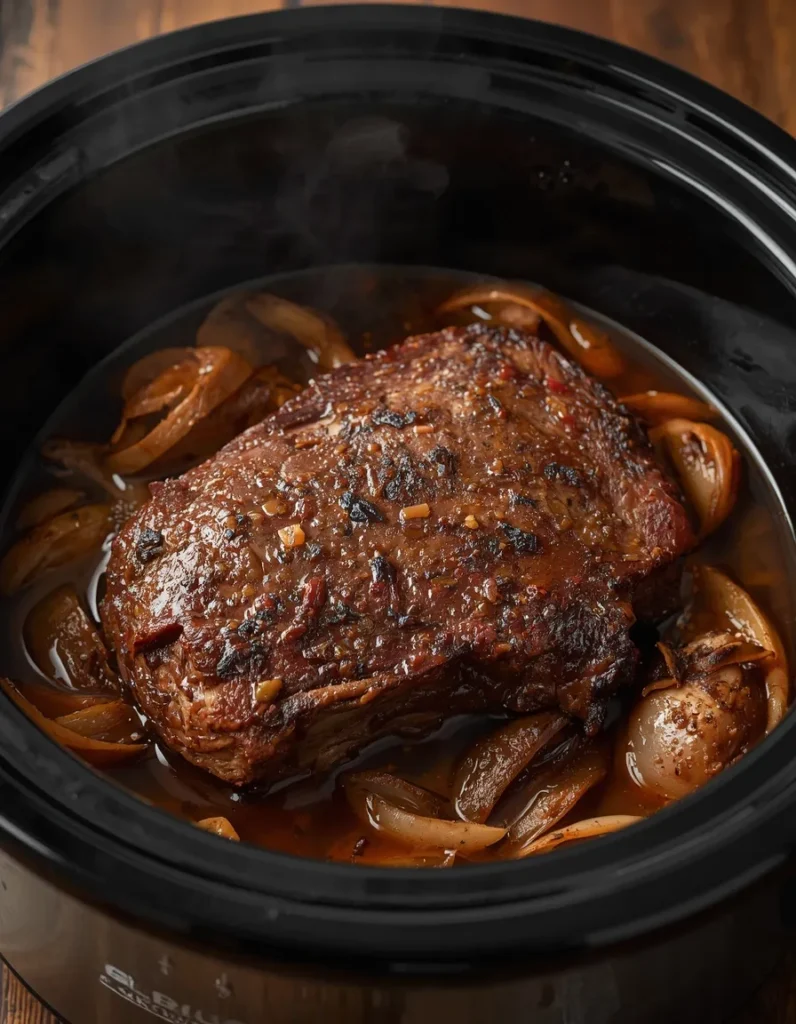
Once the Slow Cooked Tri Tip Roast is out of the skillet and resting in the slow cooker, don’t wipe the pan clean — that browned residue (the fond) is pure flavor. Add the sliced onion to the same skillet and sauté for a few minutes until softened and starting to caramelize.
Stir together the water and beef bouillon, then pour it into the skillet. Use a wooden spoon to scrape up every bit of that browned fond from the bottom of the pan as the liquid simmers. Add the minced garlic, stir for another minute, then pour the entire mixture — onions, garlic, and liquid — over the roast in the slow cooker.
Step 3: Optimized Slow Cooking
Here’s where this version diverges from the standard approach. Instead of cooking on High for 4 hours, set your slow cooker to Low and cook for 3 to 4 hours. The gentler, longer heat gives the connective tissue time to break down without pushing the meat past its ideal doneness. High heat cooks faster, but it also makes it far easier to blow past medium and end up with a dry, stringy roast.
Start checking the internal temperature around the 3-hour mark.
Step 4: The Rest
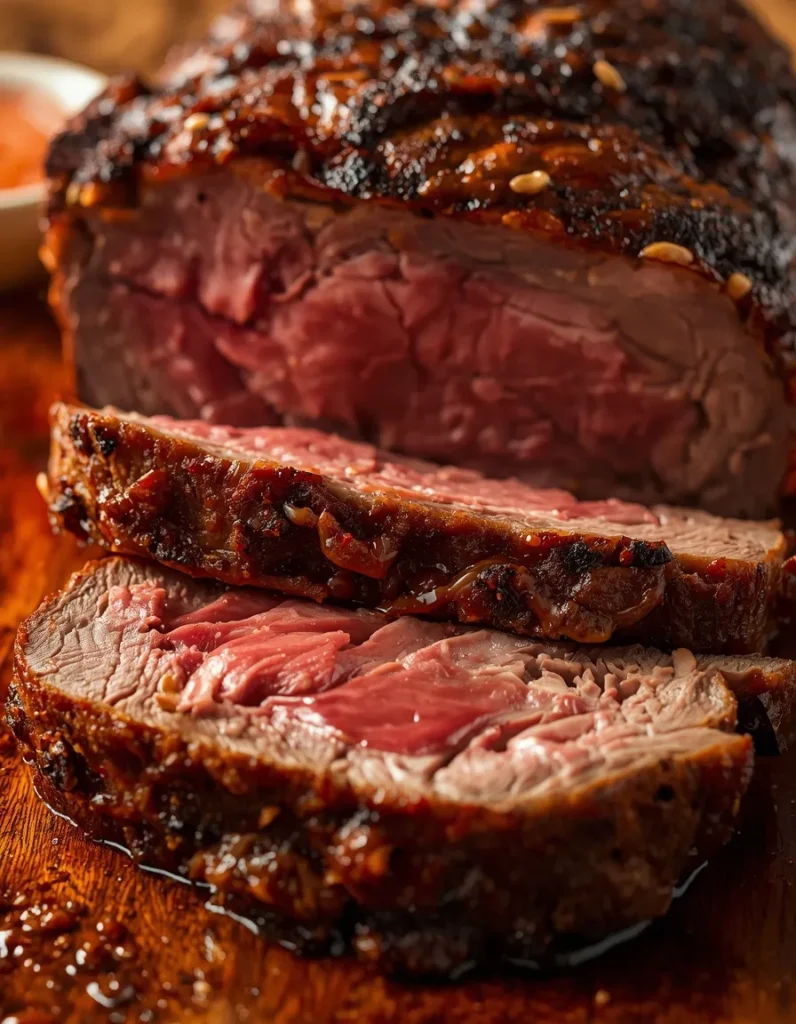
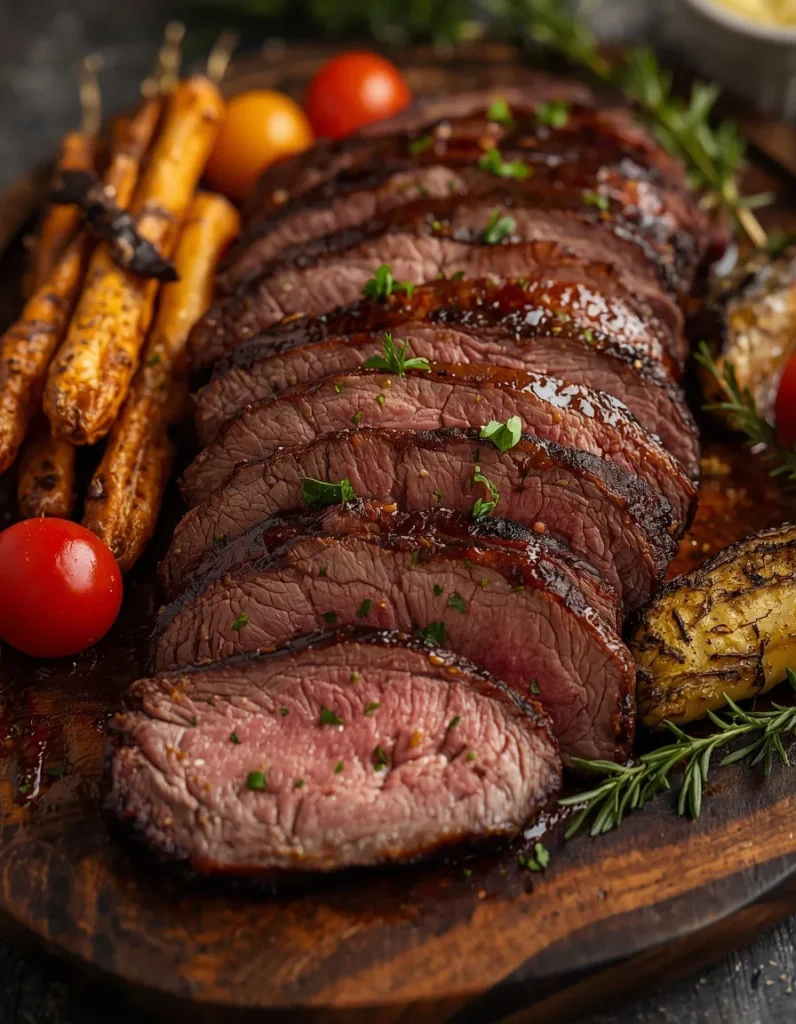
Once the Slow Cooked Tri Tip Roast hits 140°F, remove it from the slow cooker immediately — carryover heat will continue to raise the temperature slightly even after it’s out. Let it rest, loosely tented with foil, for 10 to 15 minutes before slicing. This step matters more than most people realize: cutting into it too early lets all those juices spill out onto the cutting board instead of staying in the meat.
Slice against the grain for maximum tenderness.
Temperature Guide and Doneness
| Doneness | Internal Temp |
|---|---|
| Rare | 125°F (52°C) |
| Medium-Rare | 130–135°F (54–57°C) |
| Medium | 140°F (60°C) |
| Medium-Well | 145–150°F (63–66°C) |
| Well Done | 155°F+ (68°C+) |
For this recipe, 140°F is the sweet spot. Push much past that and lean tri-tip starts to lose the moisture that makes this cooking method worth doing in the first place.
Serving Suggestions & Nutrition
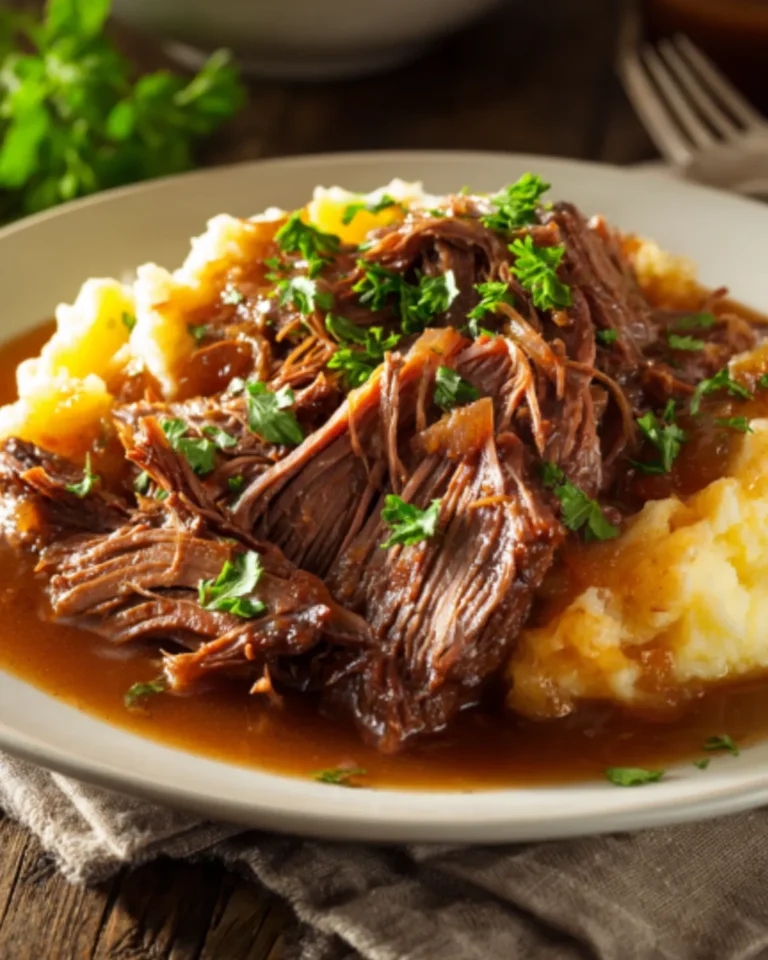
This Slow Cooked Tri Tip Roast pairs beautifully with creamy mashed potatoes, roasted root vegetables, or a simple gravy made from the leftover slow-cooker juices — just strain and reduce them on the stovetop while the meat rests. For something lighter, a crisp green salad balances out the richness nicely.
Nutrition per serving:
- Calories: 293
- Protein: 25g
- Fat: 20g
Community Gallery and Reviews
Home cooks have been sharing their results, and the variations are half the fun — some swap in a chipotle-adobo blend for extra smokiness, others add a splash of red wine to the deglazing liquid, and a few have turned the leftovers into next-day sandwiches with horseradish sauce.
Tried this recipe? Snap a photo of your roast and share it — and if you put your own spin on it, tell us what you changed. The best variations often start exactly that way.